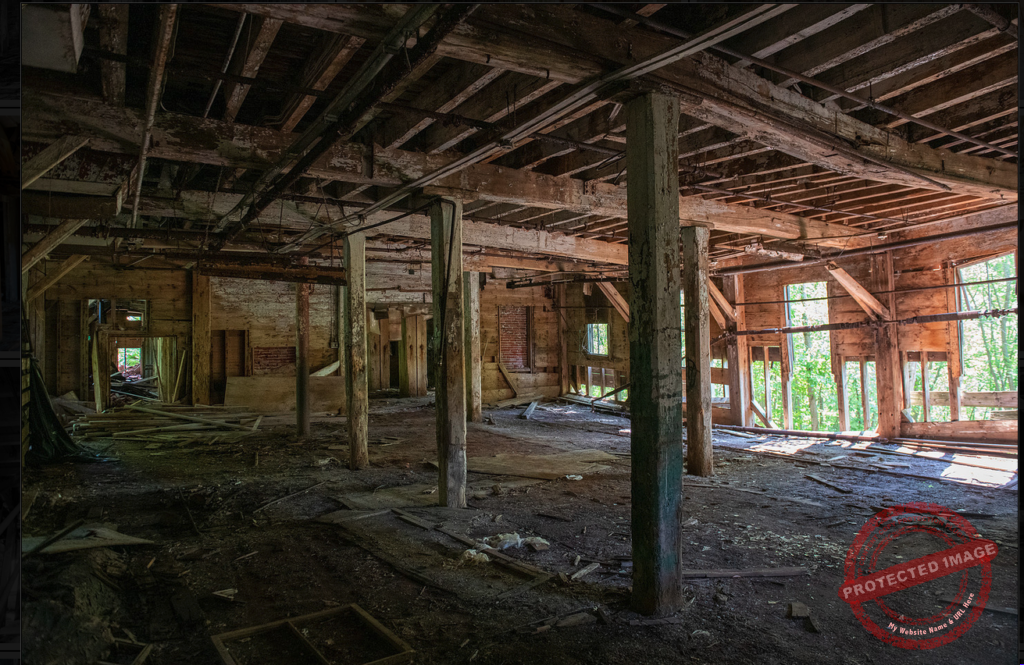
A History of Commercial Street
The Founding of a Frontier Settlement
In the spring of 1734, the first settlers arrived in the Plantation of Contoocook — later to incorporate as Boscawen in 1760 — having traveled from Newbury, Massachusetts. That first year was spent doing the essential work of survival: building homes and clearing land for crops along the plains of King Street. It was here, at the north end of King Street on Mill Brook (later called Tannery Brook), that the settlement’s first sawmill rose the following spring, marking the beginning of organized industry in the young community.
Four years later, in 1738, Stephen Gerrish built the area’s first ferry across the Merrimack River, just upstream of where the Contoocook joins it. The crossing he established would prove so vital that, decades later in 1803, the community’s first bridge would be built on almost the very same spot.
Industry Takes Root
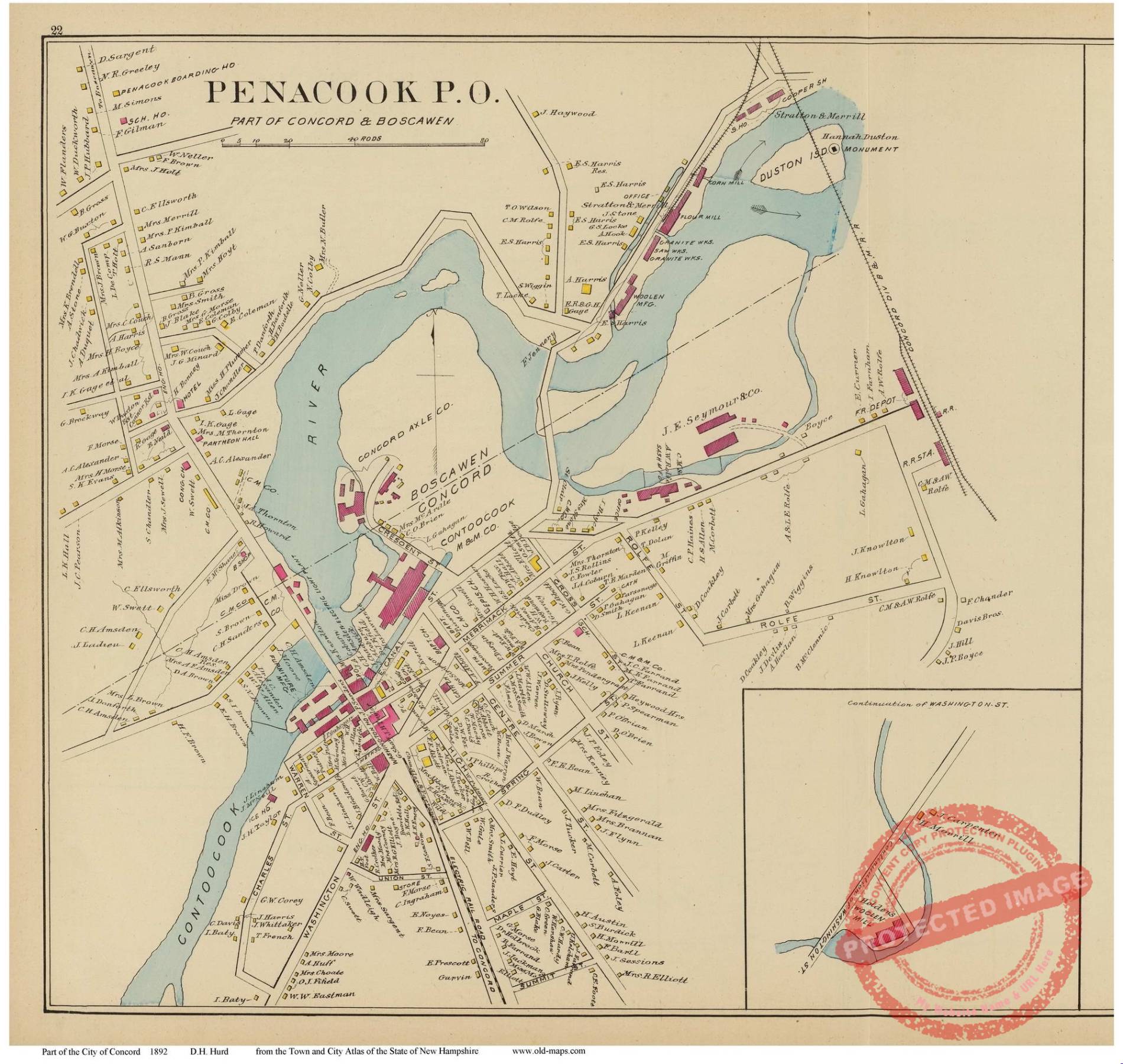
The story of Commercial Street — also known as Eel Street and Water Street throughout early 1800’s — begins around 1790, when Jeremiah Chandler of Concord constructed the area’s first gristmill and sawmill at the lower falls near where the Contoocook meets the Merrimack. These early mills, clustered just downstream from the site of today’s Essex Hydro Associates dam, marked the start of more than a century and a half of industrial activity along the river.
Ten years later, in 1800, Richard Kimball and Jeremiah Abbott brought a new kind of manufacturing to the area, building a carding and cloth-finishing mill for processing wool. Their partnership ended tragically in 1812, when both men drowned while attempting to run the rapids upstream near the Borough in a small boat.
In 1803, the ferry that Stephen Gerrish had founded — by then operating as Blanchard’s Ferry — was replaced by the region’s first bridge over the Merrimack. The Boscawen Bridge was built by Enoch Gerrish just north of Commercial Street at the original ferry crossing.
The Mills Multiply
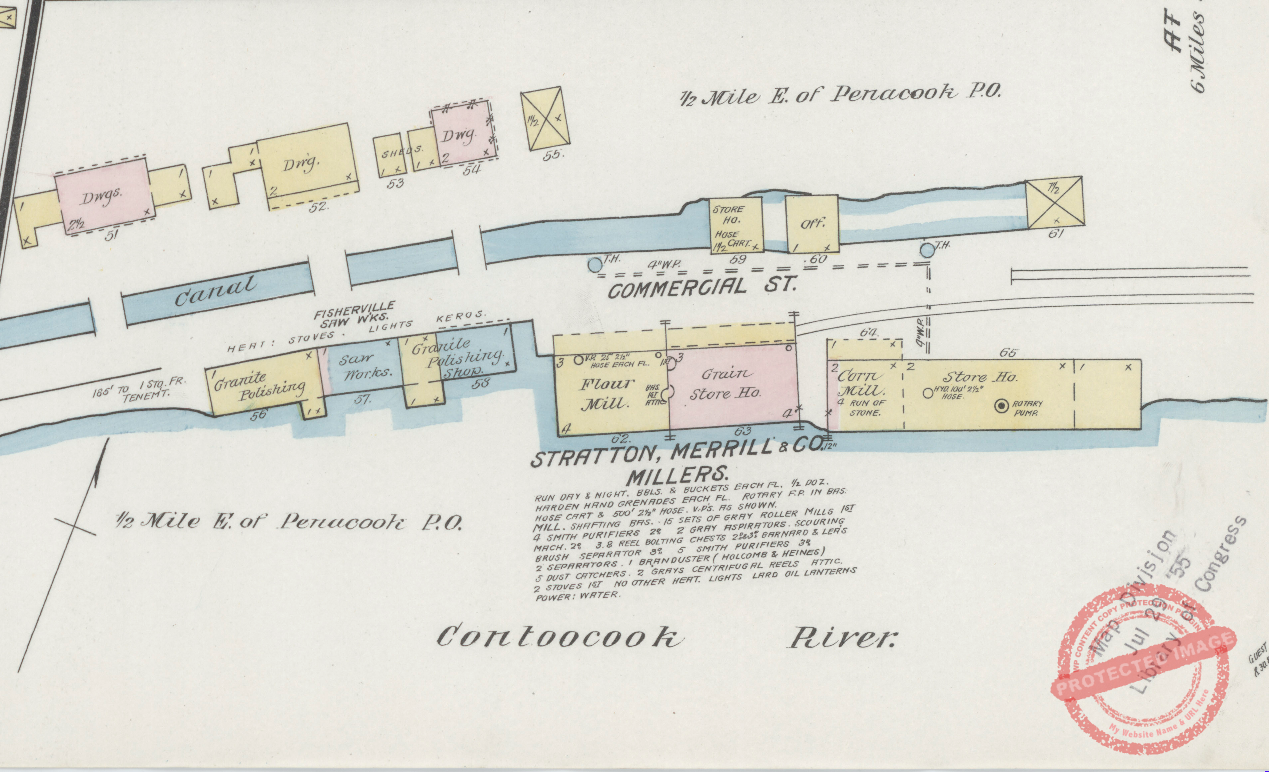
The 1820s and 1830s saw industry along the river deepen and diversify. In 1820, a second sawmill rose downstream of Chandler’s original gristmill, on ground that would eventually become home to the Stratton & Company flour mill. Ownership of this mill was a genuinely communal affair: William and Richard Gage, Job and Timothy Abbott, and John Eastman shared operation of the works, each family taking a turn — the Gages running it for two weeks, the Abbotts for one, and Eastman for another. The Gages also built a profitable trade floating lumber down the Merrimack to Boston, where it fed the region’s shipbuilding industry. By 1849, with the Gages retired, the business passed to Gerrish, Gage & Company. The sawmill ran for roughly thirty years in all before C.M. & A.W. Rolfe converted it into a corn-grinding operation in 1883.
In 1825, Warren Johnson and his wife, Mercy Sanborn, settled on Harris Hill above the lower falls and built a brick blacksmith shop that, in one form or another, would remain in operation for nearly seventy-three years. Johnson built the village’s first trip hammer in 1835, and with the later addition of a lathe, began producing the village’s first wagon axles. Fire destroyed the shop in 1836, but was rebuilt within a year. In 1852, Ephraim Eaton tried his hand at hardening and finishing anvils in the shop but lasted only a short time. Ownership of the shop passed through many hands over the years, including, Hiram Gage, the Gage & Lang Company, and finally B.F. Gage, who in 1865 sold the shop’s machinery to D. Arthur Brown & Co., who was already running the Concord Axle Works nearby. In 1898, Johnson’s original brick building was finally taken down and replaced by a stone-polishing shop run by the Concord firm of Anderson & Fox.
Wool processing continued to evolve as well. In 1831, William Hazeltine Gage built a new carding mill on the old Kimball and Abbott site, running it successfully for about a decade. The real transformation came in 1847, when Almon Harris arrived from Nelson, N.H. and bought the land, and put up a three-story stone building — seventy-five feet by forty — to manufacture woolen cloth.
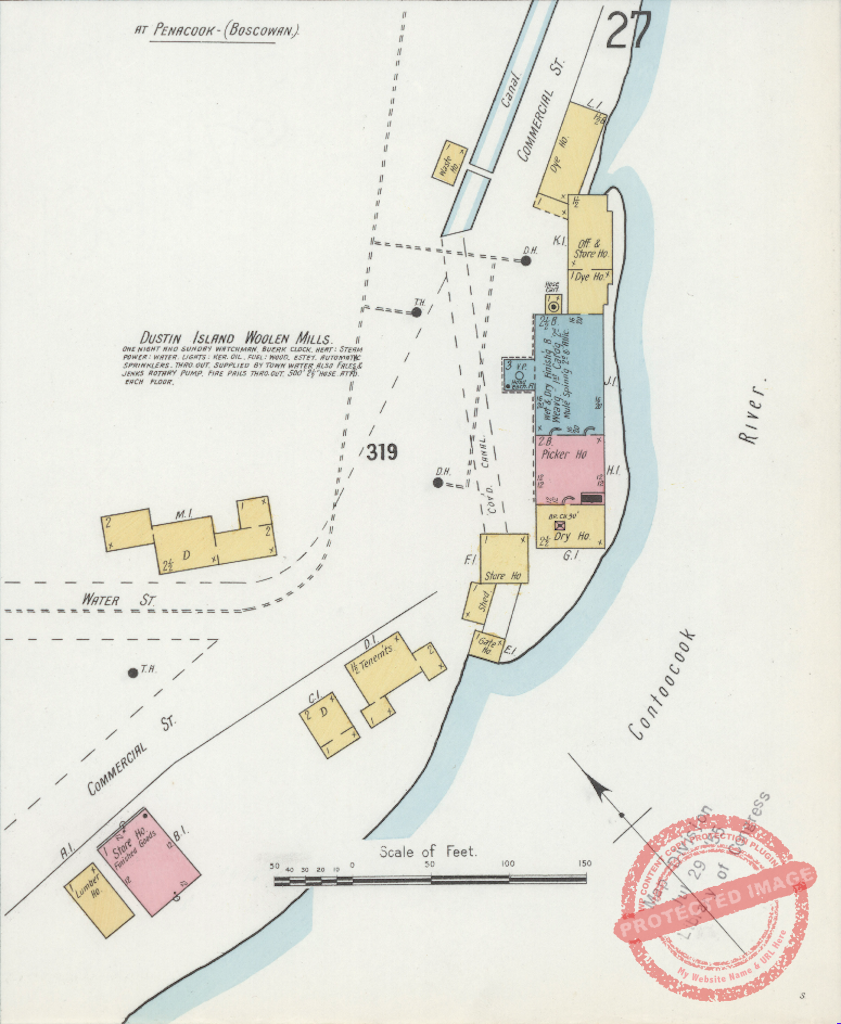
The Harris family’s business continued on after Almon Harris death in 1876. His sons Ezra and Almon A. carried the firm on as E.S. Harris & Company. In 1893, a third generation — grandsons Robert L. and Almon G. Harris — expanded the mill and reincorporated it as the Dustin Island Woolen Mills. Arthur B. Emery bought into the business as a partner in 1906, and in 1911 formed a new company, Harris-Emery Company, which took over the Dustin Island Woolen Mills’ holdings outright. It was in operation until 1922.
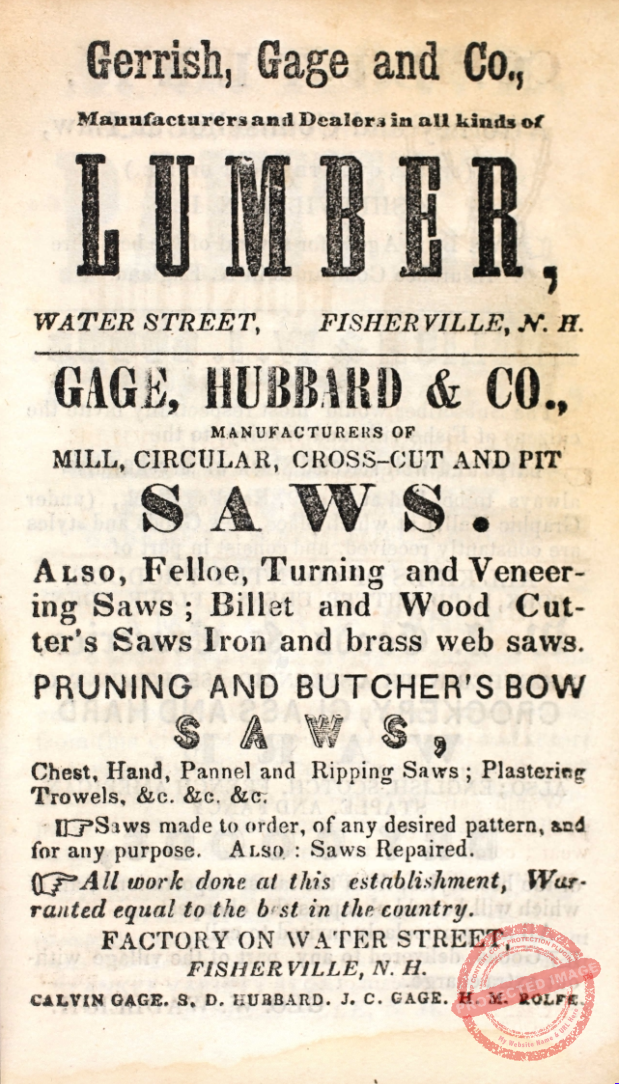
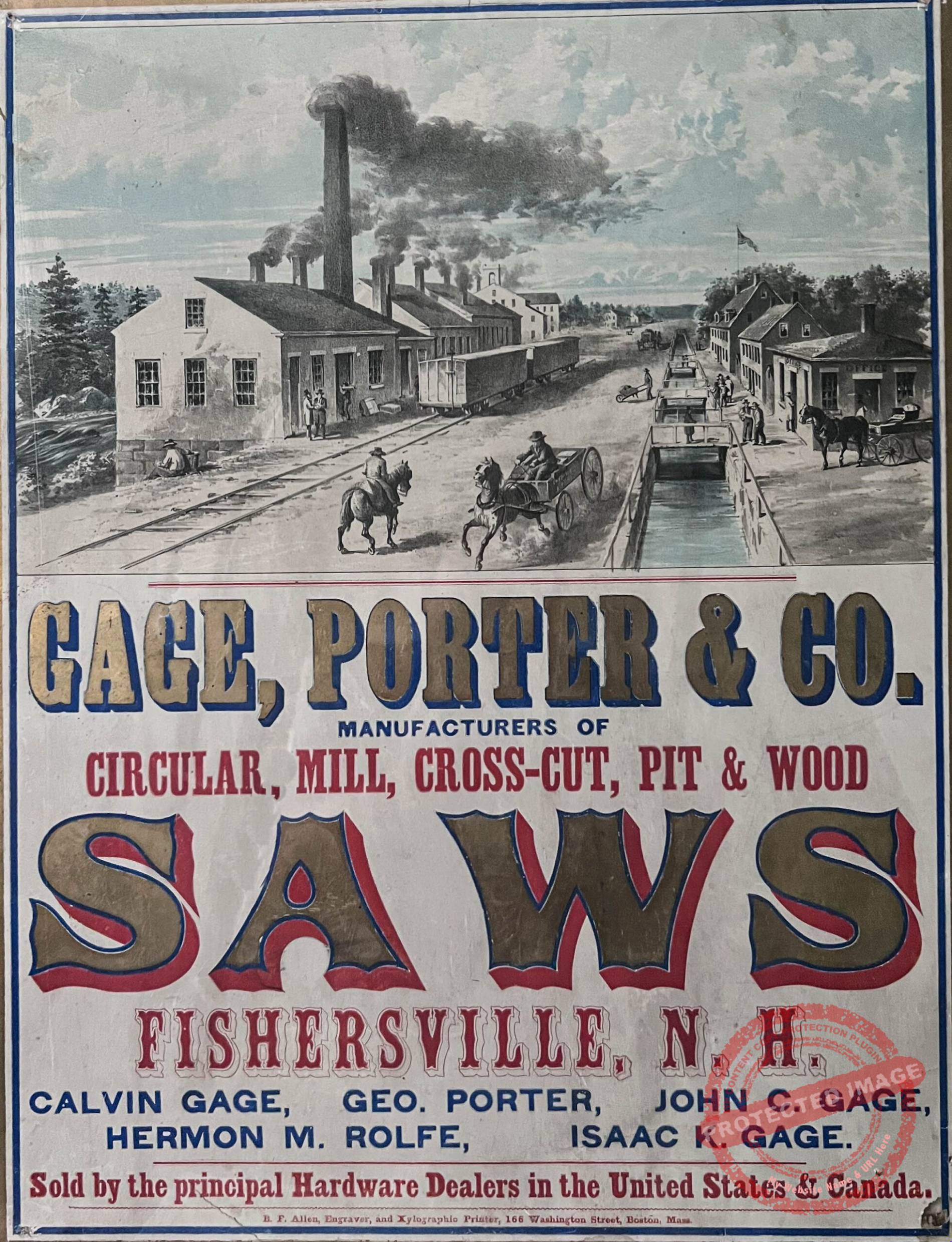
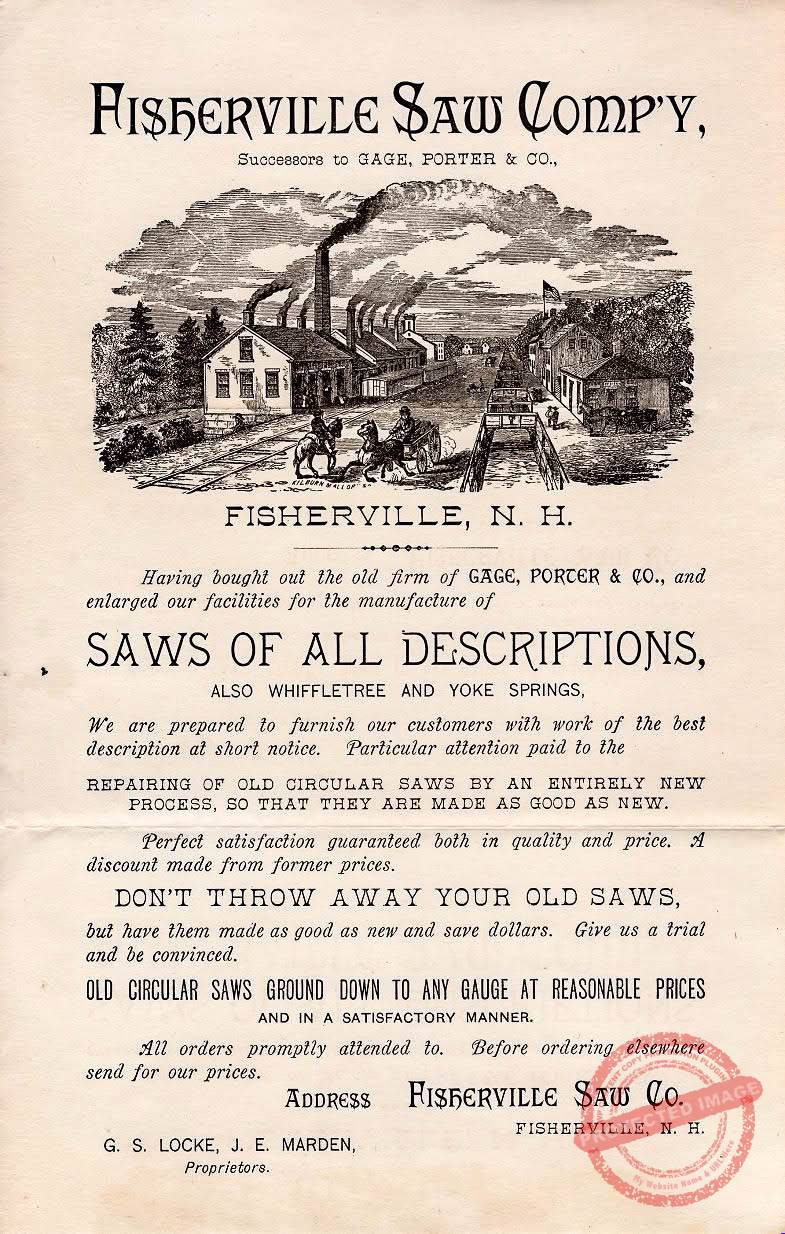
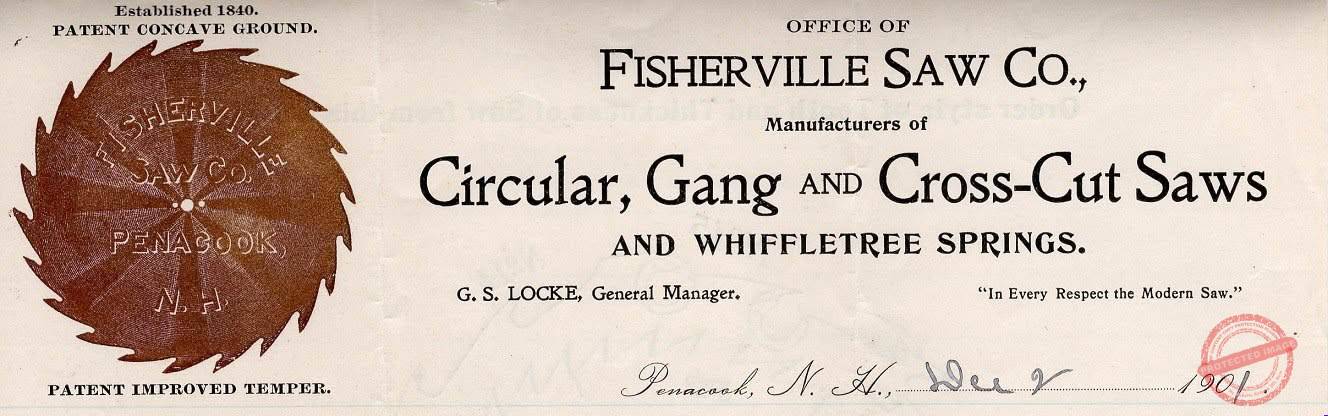
Meanwhile, in 1846, the firm of Adams & Rowell put up a new stone shop to make axes and hatchets; within a couple of years it had been converted into a saw factory, passing through a long list of operators — Leavitt & McDaniel, Porter & Rolfe, Gage, Hubbard & Company, and Gage, Porter & Company among them — before J. Edwin Marden and George S. Locke bought the business in 1882 and established the Fisherville Saw Company.
A short distance from the saw shop, a long wooden building went up in 1847, first occupied by J.B. Caldwell as a cabinet shop. The firm of Robinson & Hazelton bought the business in 1850 and ran it until 1865, after which the building cycled through several trades: Henry Ayers made beds there, J.B. Rand made casters and stool screws, Hiram Fisher made axe handles, and C.M. & A.W. Rolfe finished out the run by manufacturing sash and doors. In 1899, John Swenson tore the old building down and put up a new one for his granite-polishing business, Concord Polishing Works. It would later take over the old blacksmith site as well.
Arrival of the Northern Railroad
In October of 1842, the Boston and Maine Railroad conducted a survey for a proposed line running from the state capital at Concord, to a terminus on the Connecticut River near Lebanon. Engineers began at the railroad depot in Concord and traced a path north along the Merrimack River, through the village of Fisherville, and across the Contoocook River at Dustin Island near the north end of Commercial Street. From there the route continued through Boscawen on its way toward Franklin, following the natural corridor carved by the Merrimack River.
Ground was formally broken for the Northern Railroad on October 8, 1845. The first segment, running from Concord to Franklin, opened on December 28, 1846. Initially operated under the management of the Concord Railroad, the Northern Railroad Corporation took over operation of the line as it extended further, reaching Canaan by September 1, 1847, and finally arriving at West Lebanon on November 17 of that year.
Once running, the Northern Railroad became woven into the daily rhythm of the towns it passed through. Early steam locomotives required frequent stops to take on wood and water, and these stops doubled as points for loading passengers, mail, and freight.
The Rise of Stratton & Company
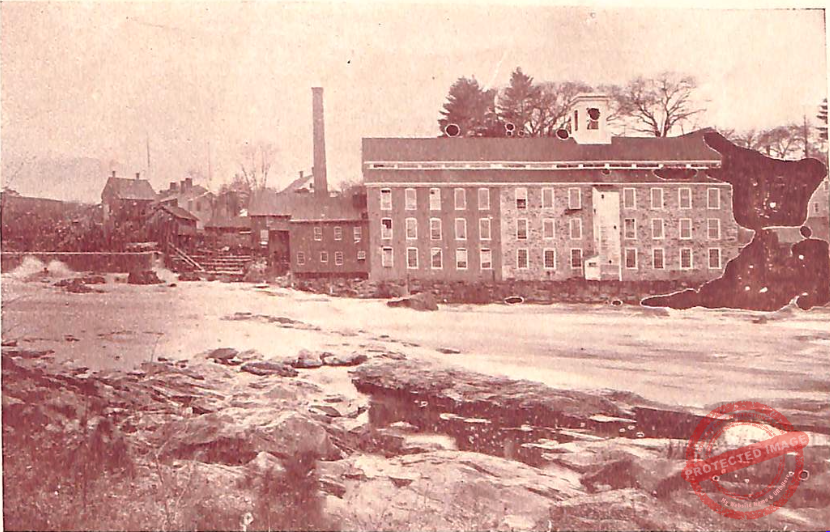
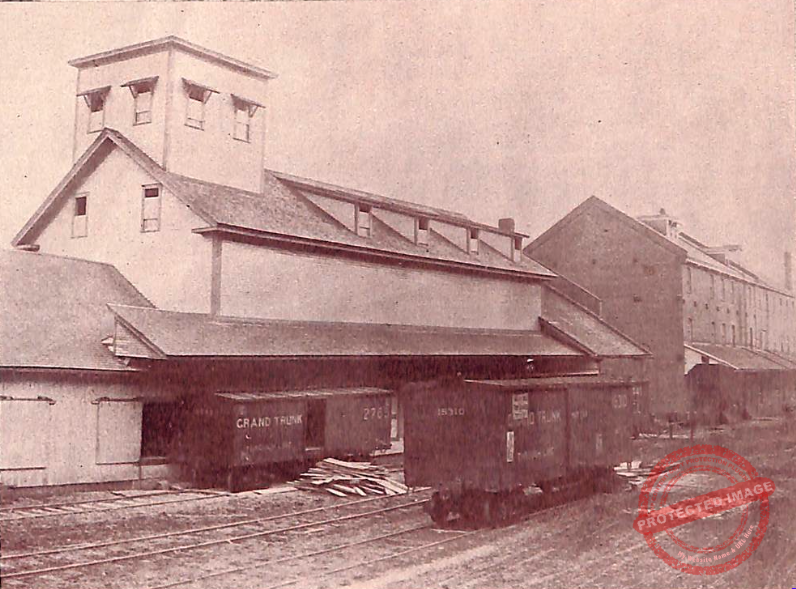
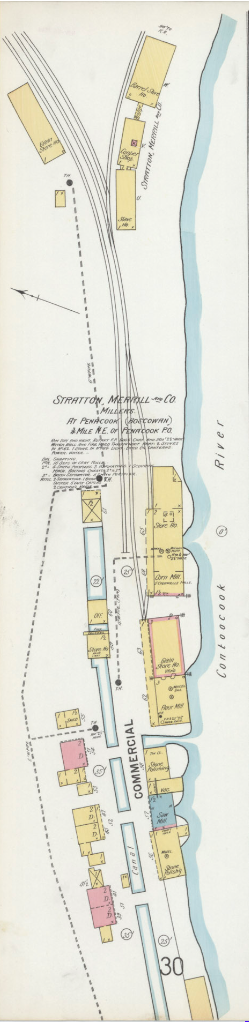
Commercial Street’s first flour mill was built at the north end of the street in 1857 by Calvin and John C. Gage. It changed hands repeatedly over the following decades: to John H. Pearson & Co. of Concord in 1859, Barron, Dodge & Company in 1867, and to the newly formed Whitcher & Stratton Company in 1871. When Mr. Whitcher retired from the business, Henry C. Merrill of Manchester joined George L. Stratton and William K. MacFarland to form Stratton, Merrill & Co.. They proceeded to rebuilt and modernized the mill. John H. Blanchard of Concord was also a partner for a short time but retired in 1885. After Henry Merrill’s death, John W. Johnson joined the firm and was reorganized once more, this time as Stratton & Company.
By the turn of the twentieth century, the mill had grown into the largest flour mill in New England, turning out three hundred barrels of flour and five hundred bushels of corn meal every day. Out pacing local supply, much of the wheat ground at the mill came from Michigan, Ohio, New York and Indiana. The property remained in operation until 1953, when its land and buildings were sold to the Boscawen Development Corporation.
The Tanning Era
Commercial Street’s industrial character shifted decisively in the twentieth century with the arrival of leather manufacturing. In 1942, Nathan Brezner acquired the old New Hampshire Spinning Mill on East Canal Street in Penacook and converted it into a modern tannery. Under his direction, the Brezner Tanning Corporation grew into New Hampshire’s largest and most successful tannery, operating from 1942 until production ceased in 1987.
In 1952, the company was sold to the Allied Kid Company of Boston, part of a larger conglomerate based in Wilmington, Delaware, that specialized in tanning goatskins. Allied Kid had ambitions to expand into upper leather made from cowhides, and to make room for that growth it purchased the old Stratton & Company buildings and the Harris-Emery Woolen Mill on Commercial Street — repurposing the former as a hide-receiving station and the latter for splitting leather.
The business continued to consolidate through the following decades. In 1972, Allied Kid and Brezner Tanning merged into the Allied Leather Company, which by the mid-1970s had become part of New York’s General Hose Company. In 1978, the Lowengart Corporation, a subsidiary of the Feuer Leather Corporation of New York, acquired Allied Leather. Despite millions of dollars invested in modernization through the early 1980s, the company cited a tight labor market and state environmental regulation when it filed for bankruptcy in 1987. The Commercial Street buildings then sat abandoned for more than a decade while the bankruptcy proceedings dragged on.
A New Chapter
On April 8, 1997, the Allied Leather Corporation filed a quitclaim deed transferring all of its Commercial Street properties to Hannah Dustin Holdings, LLC — closing out more than two centuries of continuous industrial ownership along the riverbank.
In 2009, the Town of Boscawen acquired most of the property on the south side of Commercial Street through a tax deed. Efforts to remove the decaying building and clean up the site began in 2016.
The Town of Boscawen Select Board and Brownfields Advisory Committee worked with a number of private organizations, and federal and state agencies, including the NH Division of Historical Resources, Central NH Regional Planning Commission, the Environmental Protection Agency, and others, to navigate the EPA grant process. Their efforts paid off in 2021, when the town was awarded a $500,000 EPA Cleanup Grant for Commercial Street. Removal of the severely decayed Stratton mill building began in May 2022, and final cleanup of the site was completed in July, 2026.
Since 2023, the Town of Boscawen has been working on plans for the site’s future development and use.
A full timeline of events is available here.
Sources:
“History of Penacook, NH: from its first settlement up to 1900” by D. Arthur Brown (1900)
“History and Souvenir of Penacook, New Hampshire” by John C. Linehan (1899)
“A Unique New England Industry,” Granite Monthly (1927)
1897 Concord City Directory, p. 283
1850 Concord, New Hampshire City Directory
1895 Concord, New Hampshire City Directory
“Report of the Engineer on the Route Surveyed for the Northern Railroad” (1844)
“Report of the Investigating Committee of the Northern Railroad to the Stockholders” (May, 1850)
*AI-assisted technologies (Anthropic Claude Sonnet 5) were used during the drafting phase to improve readability and sentence structure. The author performed all research and reviewed and edited all outputs.
Atkinson Aerial Views
Stratton and Company Mill photo collection by Bill Graham / Which City Images